
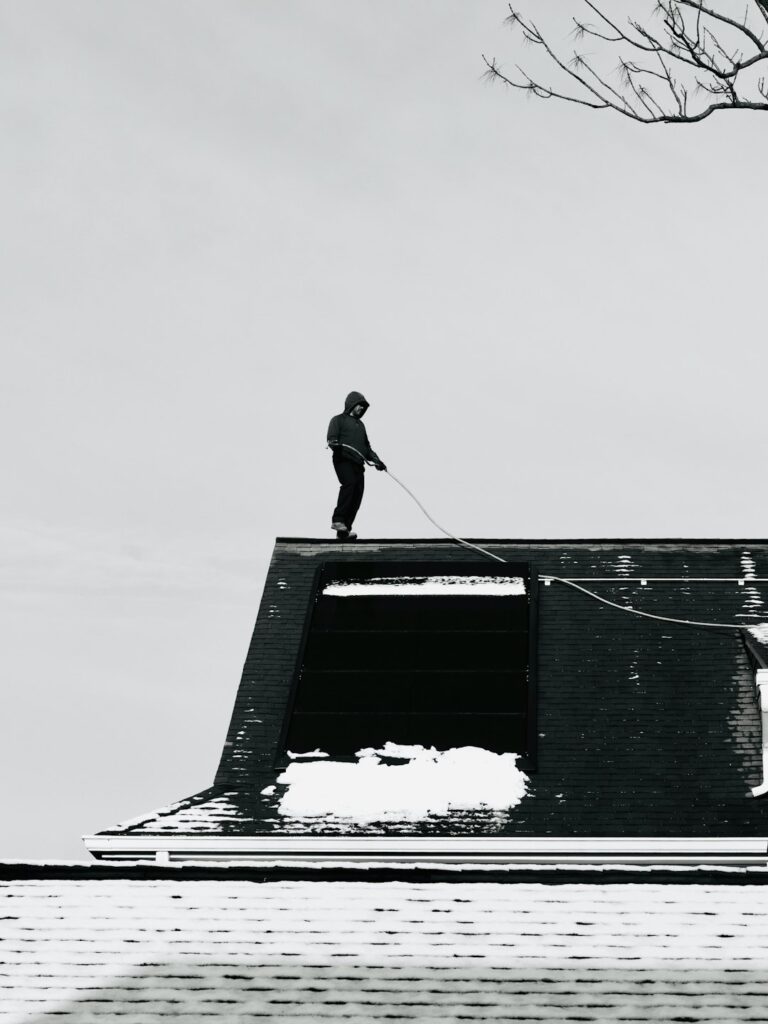
Storm damage is not always obvious from the ground. Missing shingles, exposed flashing, blocked drainage, and moisture inside the attic can develop into larger problems if they are overlooked. After strong wind, heavy rain, hail, or a rapid freeze-and-thaw cycle, a careful inspection can help identify concerns early without creating additional safety risks.
What should be checked first after a storm?
Start with safety, then inspect the property from the ground. Do not climb onto a wet, icy, steep, or visibly damaged roof.
Walk around the home and look for changes that were not present before the storm, including:
- Shingles on the lawn, driveway, porch, or against foundation walls
- Broken branches or debris resting on the roof
- Exposed dark underlayment or wood
- Bent gutters, loose downspouts, or detached fascia
- Damaged vents, chimney caps, skylights, or exterior trim
- Water pooling near the foundation
- New stains on ceilings or upper walls
Use binoculars if they help provide a closer view. Ground-level observations are safer than attempting to inspect a roof during poor weather. In winter, snow can hide missing shingles and make roof surfaces especially dangerous.
How can missing or damaged shingles be identified?
A missing shingle may leave a rectangular patch where the roofing material used to be. The exposed area can appear darker than surrounding shingles, particularly if the underlayment or roof decking is visible.
Look for shingles that are:
- Completely absent
- Lifted at the edges
- Creased, folded, or partially detached
- Cracked or split
- Missing sections of their surface coating
- Scattered across the property
Wind damage is not limited to shingles that have blown away. A shingle may remain in place but lose its seal or fasteners. Raised edges, uneven rows, and visible nail heads can indicate that the roof covering has been disturbed.
Hail damage can be harder to recognize. It may appear as small dents or areas where the protective granules have been knocked away. Check metal vents, gutters, flashing, and siding for dents as well. Damage in several exposed areas may suggest that the roof was affected even if no shingles are missing.
What roof areas are commonly overlooked?
Storms often damage roof components other than the main shingles. Check the edges, penetrations, and drainage areas carefully from the ground.
Pay attention to:
- Ridge and box vents
- Plumbing vent collars
- Chimney flashing
- Skylight edges
- Valleys where roof sections meet
- Eaves and rake edges
- Gutter fasteners and downspout connections
- Drip edge and fascia boards
Roof valleys carry water from larger sections of the roof. Leaves, branches, and windblown debris can block these channels, allowing water to move under nearby roofing materials. Do not remove heavy debris from a roof if doing so requires climbing or walking on the surface.
Flashing around chimneys, walls, and skylights is another common trouble spot. Bent, separated, or displaced flashing can allow water into the structure even when the shingles appear intact.
How can you check the attic for storm damage?
The attic can reveal leaks that are not yet visible in finished rooms. Inspect it only if the space can be entered safely and there is no exposed wiring, standing water, structural instability, or other hazard.
Look for:
- Damp insulation
- Dark or discolored wood
- Water marks on rafters or roof decking
- Drips or puddles
- Musty odors
- Daylight visible through the roof
- Rust around nails or metal fasteners
A leak may not appear directly below the damaged roof area. Water can travel along rafters, insulation, or other framing before entering a ceiling. For that reason, a stain inside the home may not line up with the point where water entered the roof.
If the attic is insulated heavily, damage may be hidden from view. Avoid disturbing wet insulation unnecessarily, especially if the ceiling below is sagging or water is near electrical fixtures.
What indoor signs indicate a roof leak?
Inspect upper-floor rooms, closets, and areas beneath roof valleys or exterior walls. Fresh stains may look tan, brown, or yellow, while newer moisture can appear as a damp patch or glossy area.
Warning signs include:
- Bubbling or peeling paint
- Soft or sagging drywall
- Discolored ceiling areas
- Wet window or door trim near the roofline
- Damp insulation around recessed fixtures
- Dripping water during or after rainfall
- A persistent musty smell
A small ceiling stain should not be dismissed simply because it stops dripping. Roof leaks can be intermittent and may only appear when wind pushes rain in a particular direction. Melting snow can also expose a problem several days after a storm.
In Syracuse, NY, seasonal weather can combine wind-driven rain, snow, ice, and repeated freeze-and-thaw conditions. Those changes can enlarge small openings around flashing, fasteners, and roof edges. A roof that looks dry during a ground inspection may still have moisture trapped beneath its materials.
What should be done if water is entering the home?
Protect people and belongings first. Keep away from sagging ceilings, wet electrical fixtures, and areas where water is pooling near outlets or wiring.
If it is safe to do so:

- Place containers beneath active drips
- Move furniture and valuables away from the affected area
- Use towels to limit the spread of water
- Photograph visible damage and water stains
- Note when the leak began and what weather conditions were present
Do not puncture a sagging ceiling. A bulge may contain accumulated water, and opening it without the proper precautions can release water suddenly or expose electrical hazards.
If water has reached electrical equipment, stop using the affected circuit if that can be done safely. Do not enter standing water to reach a panel.
Is it safe to inspect the roof personally?
A roof inspection from the ground is usually the safest first step. Walking on a roof after a storm can be dangerous because surfaces may be wet, icy, unstable, or covered by loose granules and debris.
Extra caution is needed when:
- Wind is still present
- Snow or ice covers the roof
- Shingles are loose or missing
- A tree or large branch has struck the structure
- The roof deck appears soft or sagging
- Ladders cannot be placed on stable, level ground
- The home has a steep roof or multiple levels
A ladder should not be used to reach a roof when conditions are slippery or the person using it is not trained to do so. Storm damage can also make roof edges, gutters, and decking less secure than they appear.
What damage requires urgent attention?
Some conditions should be treated as urgent because they can allow rapid water entry or indicate structural risk.
Take immediate safety precautions if there is:
- A large opening in the roof
- A fallen tree or heavy branch on the structure
- A sagging ceiling
- Active water near electrical equipment
- A damaged chimney leaning or separating from the roof
- A section of roof visibly collapsed
- Water entering multiple rooms
- Exposed interior framing or insulation
Temporary protection may be possible from inside the home, but roof coverings should not be altered in unsafe weather. Tarping or other exterior work can be hazardous and may cause additional damage if performed improperly.
How should storm damage be documented?
Photographs and written notes can make it easier to track changes and explain what was found. Take wide photos showing the affected roof area and closer photos of individual problems, such as lifted shingles, dented metal, damaged gutters, or interior stains.
Record:
- The date and approximate time of the storm
- The type of weather observed
- When damage was first noticed
- Rooms or attic areas affected
- Whether water is still entering
- Any temporary steps taken
Keep damaged materials if they can be removed safely, but do not disturb roofing components merely to create evidence. Documentation is most useful when it accurately shows the condition without increasing the risk of injury or additional water intrusion.
