
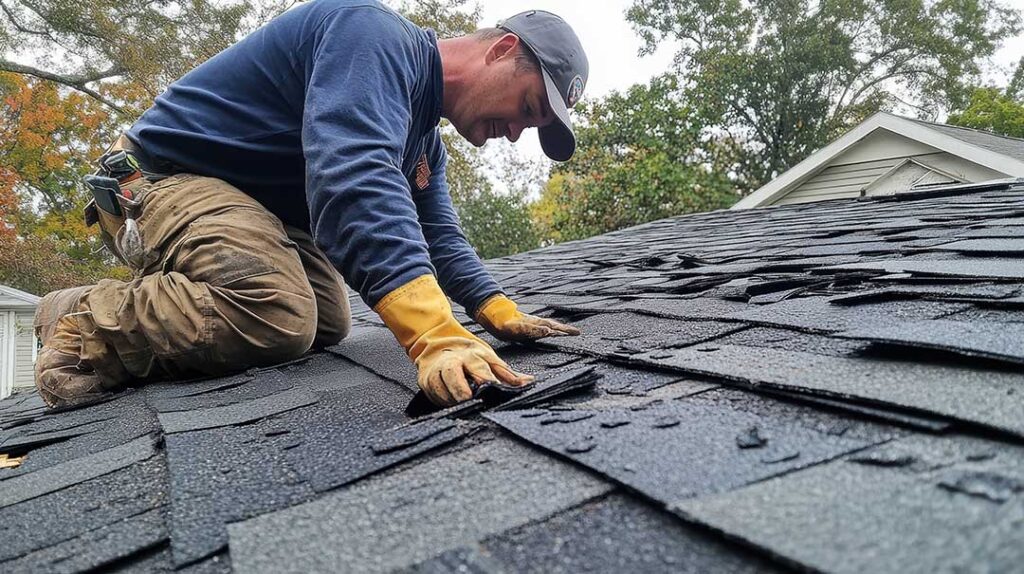
Ice dams are ridges of frozen water that form along a roof’s lower edge when snow melts on warmer upper roof surfaces and refreezes near the colder eaves. In Syracuse, NY, repeated snow, freeze-thaw cycles, and older housing can create conditions where ice dams become a recurring winter concern.
An ice dam is more than a strip of ice. It can hold meltwater against the roof, allowing water to move beneath shingles, around flashing, or into attic insulation and interior walls.
What causes an ice dam?
An ice dam forms when different parts of a roof have different temperatures. Snow on the warmer section melts, and the water flows toward the eaves. Because the eaves extend beyond the heated portion of the building, they are often colder. The runoff freezes there and gradually builds a raised barrier.
The cycle usually looks like this:
- Snow accumulates on the roof.
- Heat escapes from the living space into the attic or roof assembly.
- Snow over the warmer area melts.
- Meltwater runs toward the colder roof edge.
- The water freezes and creates a dam.
- More meltwater collects behind the ice.
Ice dams are most likely after heavy snowfall followed by sunny weather, warming temperatures, or a rapid change from cold conditions to above-freezing temperatures. They can also develop during repeated winter cycles in which snow melts during the day and freezes overnight.
Why are ice dams a concern?
The most common problem is water intrusion. Roofing shingles are designed to shed water moving downhill, not to resist water that remains pooled behind a wall of ice. If water backs up far enough, it may find openings around roofing materials, fasteners, vents, chimneys, skylights, or wall-to-roof transitions.
Possible signs of damage include:
- Brown or yellow ceiling stains near exterior walls
- Damp attic insulation
- Peeling paint or bubbling drywall
- Water dripping from ceiling fixtures or recessed lights
- Mold-like odors in the attic or upper floors
- Wet framing, roof sheathing, or insulation
- Icicles that appear alongside large, uneven ice buildup
Heavy icicles do not automatically mean an ice dam is present. However, large icicles combined with a thick ridge of ice at the roof edge are a warning sign. Icicles can also become a falling hazard for people, pets, vehicles, and property below.
How does attic heat contribute?
Attic heat is one of the main factors behind ice dam formation. Warm air may reach the attic through gaps around ceiling fixtures, plumbing penetrations, attic hatches, chimneys, ductwork, and electrical wiring. If the attic is poorly insulated or air-sealed, that heat can warm the underside of the roof.
A properly designed roof assembly helps keep the roof surface closer to the outdoor temperature. This reduces uneven melting and allows snow to remain more consistent across the roof.
Insulation alone does not solve every problem. If warm indoor air is still leaking into the attic, adding insulation over the leakage may hide the symptom without correcting the source. Air sealing at the ceiling plane is often a necessary part of long-term prevention.
What role does ventilation play?
Ventilation helps move cold outdoor air through the attic and release heat and moisture. Many roof assemblies use a combination of low intake ventilation near the eaves and high exhaust ventilation near the ridge or upper roof area.
The exact design depends on the building, roof shape, insulation arrangement, and existing openings. Ventilation should not be blocked by insulation, and exhaust vents should not simply be added without considering how air enters the attic.
Poor ventilation can contribute to:
- Warmer roof surfaces beneath snow
- Condensation on the underside of roof sheathing
- Damp insulation
- Wood deterioration
- Uneven snow melting
Ventilation is not a substitute for air sealing. Both systems address different issues: air sealing limits heat and moisture movement from the home, while ventilation helps manage the attic environment.
How can homeowners reduce the risk before winter?
The most effective prevention usually happens before snow arrives. Helpful steps include:
- Inspecting the attic for damp insulation, blocked vents, and visible air leaks
- Sealing gaps around attic access panels, pipes, wires, and ceiling fixtures
- Confirming that insulation is evenly distributed and not compressed
- Keeping soffit or eave intake paths open
- Checking roof penetrations and flashing for signs of deterioration
- Cleaning gutters and downspouts before winter, while recognizing that clean gutters alone do not prevent ice dams
- Trimming branches that may add snow load or interfere with roof drainage
- Reviewing areas where previous leaks or ice buildup have occurred
In older homes, additions, dormers, enclosed porches, and changes in roof height can create sections that warm or cool differently. These transitions deserve particular attention because they may collect snow or concentrate runoff.
Does removing snow from the roof prevent ice dams?
Removing excess snow can reduce the amount of meltwater available to form an ice dam, but the method matters. Roof raking from the ground may be appropriate for some simple roof sections when performed carefully with equipment designed for that purpose.
Climbing onto an icy or snow-covered roof is hazardous. Shovels, axes, hammers, and other tools can damage shingles, flashing, gutters, and underlayment. Snow removal also may not address the underlying heat loss, so ice dams can return after the next snowfall.
For steep roofs, multi-story buildings, fragile roofing, or heavy snow accumulation, avoiding roof access is the safer choice. Falling ice and snow can also create danger around entrances, walkways, and parked vehicles.
Are heating cables a permanent solution?
Roof heating cables can create channels for water to drain through an ice dam, but they do not correct attic heat loss, air leakage, or ventilation problems. They may be useful in limited areas when properly installed according to the product’s instructions and applicable electrical safety requirements.
Heating cables can create additional concerns if they are damaged, improperly fastened, placed on unsuitable roofing, or connected to unsafe electrical equipment. They should be viewed as a targeted measure rather than a complete prevention strategy.
What should happen if water is already leaking?
If water is entering the home, place containers under active drips and move furniture or belongings away from the affected area. Water near light fixtures, outlets, or electrical wiring creates an electrical hazard; avoid touching wet electrical components and use the home’s emergency procedures if needed.
Do not chip away at a roof-edge ice dam from a ladder or roof. Breaking ice can damage roofing and may cause a sudden release of water or falling ice. Document visible damage, monitor the affected area, and arrange for the roof and attic conditions to be evaluated when access is safe.
After the immediate leak is controlled, the source still needs attention. Replacing damaged ceiling materials without correcting heat loss, air leakage, ventilation, or roof defects can allow the problem to return.
What is the main prevention principle?
Ice dam prevention depends on keeping the roof surface temperature more uniform and reducing the amount of heat escaping into the attic. In practical terms, that means combining ceiling-plane air sealing, adequate insulation, properly functioning ventilation, sound roof details, and safe snow management.
For households in Syracuse, winter preparation is especially useful before the first major snowfall. A dry attic, clear ventilation paths, and a roof with sound flashing and drainage details provide a stronger defense than relying on a single product or quick fix.
